

Alumni Spotlight: Victor McKenzie, Virginia Health Catalyst
Posted in News Story Spotlight
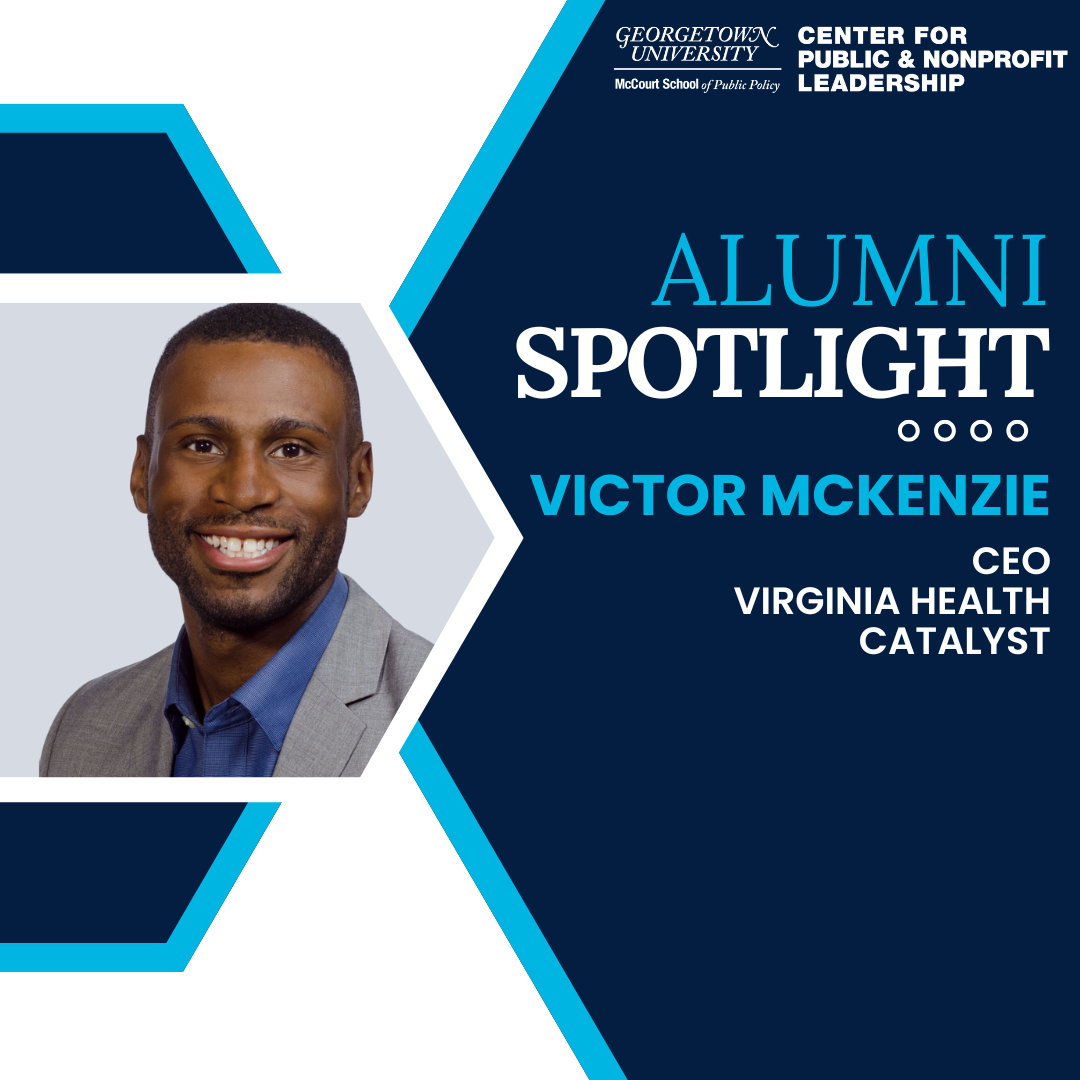
Victor McKenzie is the incoming CEO at Virginia Health Catalyst, and the current Chair of Virginia’s Addiction and Recovery Council. CPNL interviewed Victor about his experience in the Nonprofit Management Executive Certificate Program and how it has prepared him for his new role as CEO.
Question #1: As you step into this new role of CEO, what are you most excited about? What are some challenges that you know you’re facing as you step into this role?
Victor: Great question. Throughout my career, I’ve been focused on finding ways to move the needle. I’ve worked in community with folks one-on-one. That is one end of the pipeline. There are so many things that have to happen before the people that you work with feel the impact that they’re feeling.
So I shifted my focus to changing the systems that shape the pipeline. This was one of the reasons I applied for the CEO role at Catalyst. I’m looking forward to joining a really good group of folks who are passionate about everything from oral health care to health equity to rural health. This new role gives me the chance to leverage everything I’ve done in my career, the relationships I’ve built with legislators and other stakeholders, to help drive Catalyst’s mission forward.
Question #2: What are some challenges that you know you’re facing as you step into this role?
The healthcare landscape has shifted massively. At every level, we are finding that there are going to be more barriers put up. Instead of making it easier for folks to access healthcare, they’re making it harder. One example is the new work requirements being implemented in Georgia that are increasing administrative burden. It costs the State more money to implement these administrative processes than they actually recoup or save. And here in Virginia, the Medicaid trigger law would automatically disenroll 700,000 people from healthcare if the federal government changes its payment ratio. The stakes are incredibly high.
Question #3: You have an impactful record in public service and advocacy, especially around health equity, grant giving, and local services. So what motivates you to do this work?
Victor: Great great question. I think healthcare, in particular, is just such a core component of our lives. I grew up with my grandmother, who was a diabetic and had to have her insulin. She would send me on errands. “Go to the pharmacist, go pick up my needles and my insulin, or go down here and go pick something up.”
My grandmother had such an outsized impact on my life. So much of my life was dependent on my grandmother being able to have healthcare. I believe that making sure people are healthy should be a core priority of our society.
Question #4: The nonprofit sector is facing a lot of challenges today. What motivates you to keep doing this work, and what motivates you when you face setbacks?
Victor: We face setbacks all the time. Sometimes you don’t get the grant that you thought you were going to get. Sometimes the legislation doesn’t pass. Sometimes the people that you represent feel a little bit different about the way you’re doing the work. I believe that having a concrete and core set of principles that you live by, that you can always come back to, helps you remember your why. Those are the things that, when the wind blows this way or that way, you can stand strong, and they bring you back, front and center.
Question #5: What advice do you give to your peers in the sector, as they face similar challenges?
Victor: My advice is to remember that I know resources are scarce, but the problem isn’t. It’s not a competition between organizations. Our competition is, how fast can we solve the most challenging problems that we have? My advice to individual leaders is to know your why. Going back to the know your why. Have support systems outside of your organization, whether that’s your friends or contemporary groups that you can talk with and ideate, and bounce ideas off. Have something that you do that is good for your mental and physical health. The work isn’t going anywhere, and you can burn yourself out.
I took over leading this previous organization when I was 27. I was very young in the leadership of a statewide organization. Oftentimes, I was the only person of color in the room. Oftentimes, I was the only male in the room, and there were constant microaggressions. You are going to face challenges and feel the need to overcompensate or present yourself a certain way. You have to have those outlets to remember who you are through all of this.
Question #6: How did your experience in the Nonprofit Management Executive Certificate Program prepare you for your leadership transition? What are some important tools that you gained for the program to prepare you for this moment?
Victor: What I tell folks is that I think the Nonprofit Management Program gives you a toolbox that you could pull from in areas that you wanted to strengthen and areas that would be of real value to your organization. You may have good instincts, but at a certain level, you exchange those survival tools for thriving tools. The Certificate Program was really instrumental along my journey and gave me the tool set I still use. We have a folder full of documents that I still reference today. It gave me the ability to articulate my vision of what I wanted to see, and it gave me a group of people to test it out with.
I’ve done leadership programs in the past, and Georgetown was very unique in the cohort they brought together. It was really valuable to be in the same room with folks from various backgrounds that you would not normally interact with otherwise
It was just such a wonderful experience. There are some folks that I still keep in close contact with today. And some folks that I’ve seen absolutely take that network and blossom. I have to say this is one of the signature reasons I decided to go back and get my MBA from Georgetown’s McDonough School of Business, because of how transformational my experience was..
Question #7: What is some advice you would give to someone who’s considering applying to the Nonprofit Certificate Program?
Victor: Like Nike, just do it. You’ll walk away with a ready-made toolbox, whether you are giving a presentation to your board, whether you are trying to articulate a vision to a funder, whether you are putting together or mapping stakeholder groups, or whether you are finding better ways to connect and align, and support your team.
Everything is in that toolbox, and you walk away with an alumni network that is strong and folks that you can call for advice for support. Just do it. Just do it.